Software
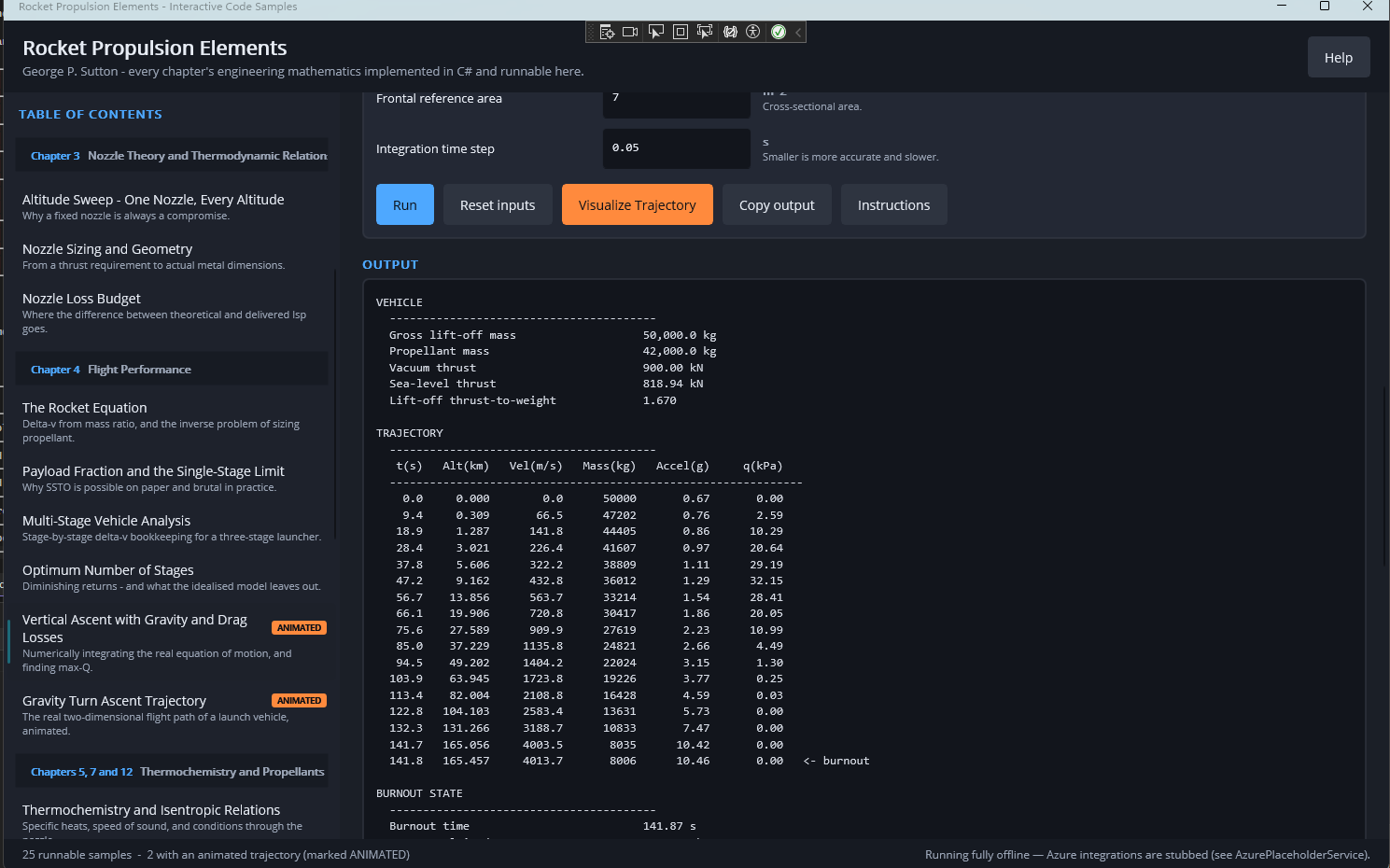
These are two programs I wrote as companions to the foundational texts in astronautics: Fundamentals of Astrodynamics and Rocket Propulsion Elements. Each one implements the equations straight from its book, so instead of grinding through a calculation by hand you can enter the inputs, see the answer, change a parameter and immediately watch what it does to the orbit or the engine.
My goal with them is simple: to help STEM students actually learn rocket science. The math in these books is not the hard part — the hard part is building intuition for what the math means. By making the equations interactive, students can experiment, reproduce the worked examples, check their own homework, and develop a feel for the trade-offs that real mission and engine designers live with every day. If these tools help one more student stay with the subject long enough to fall in love with it, they have done their job.
Fundamentals of Astrodynamics Toolkit
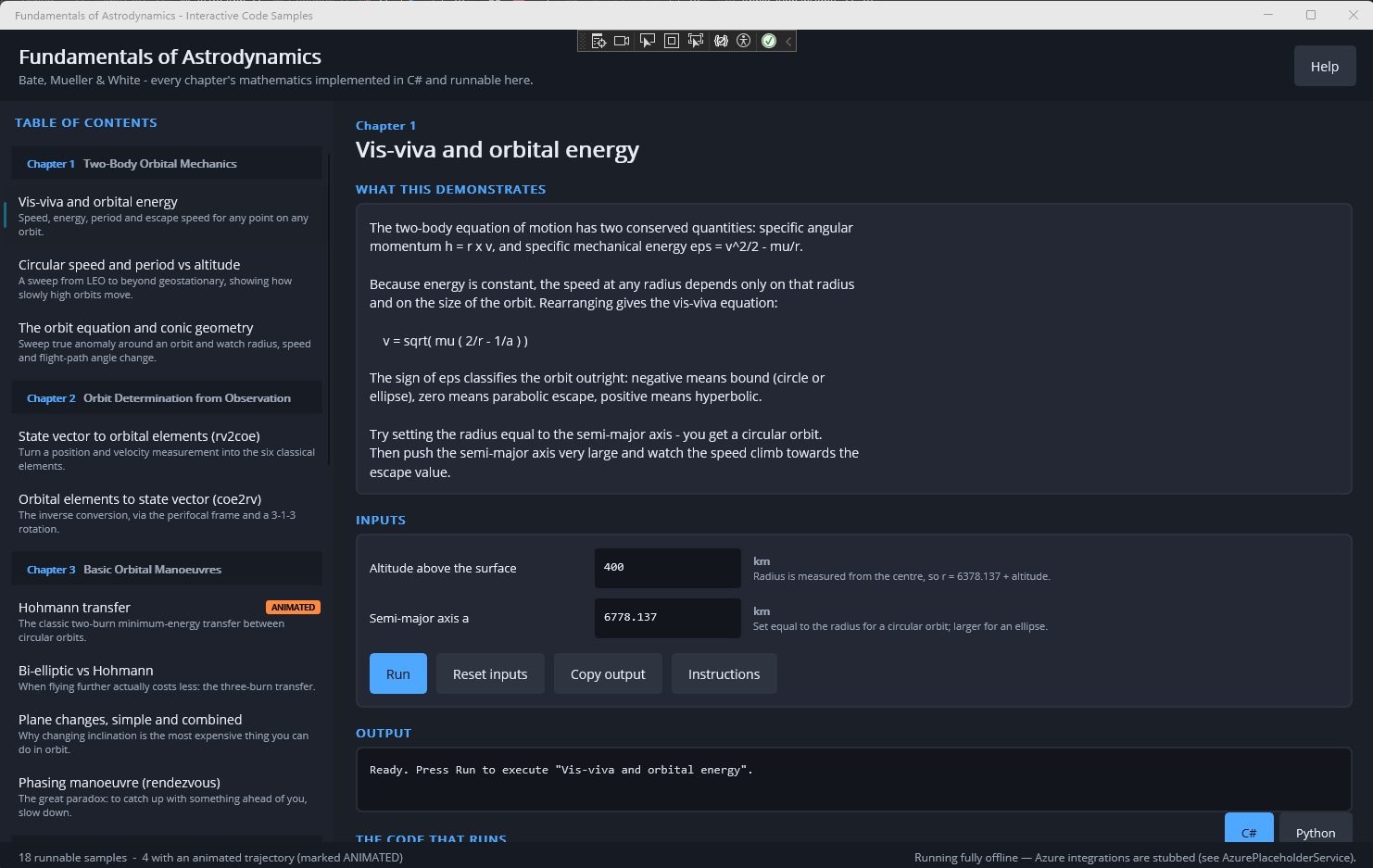
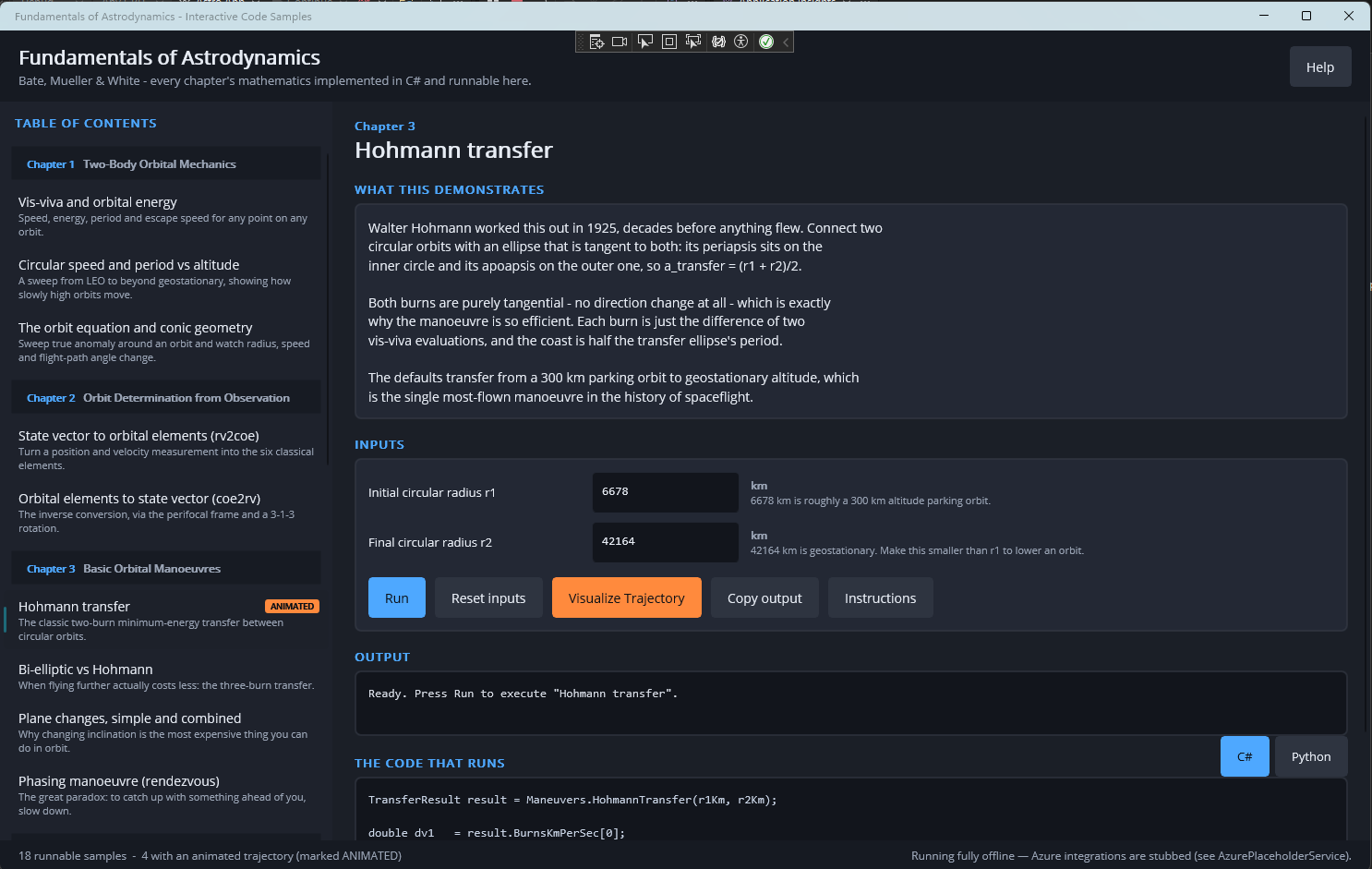
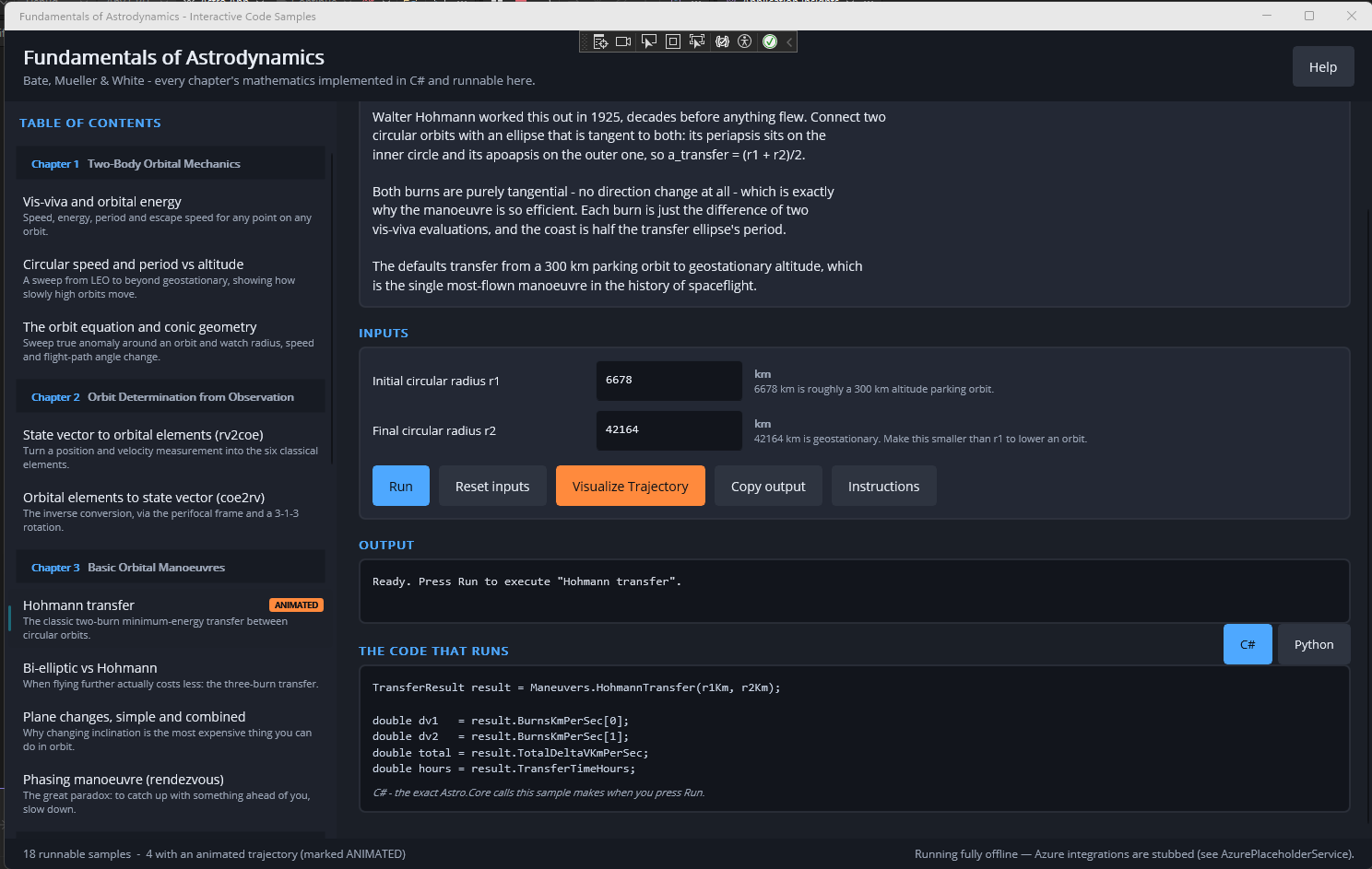
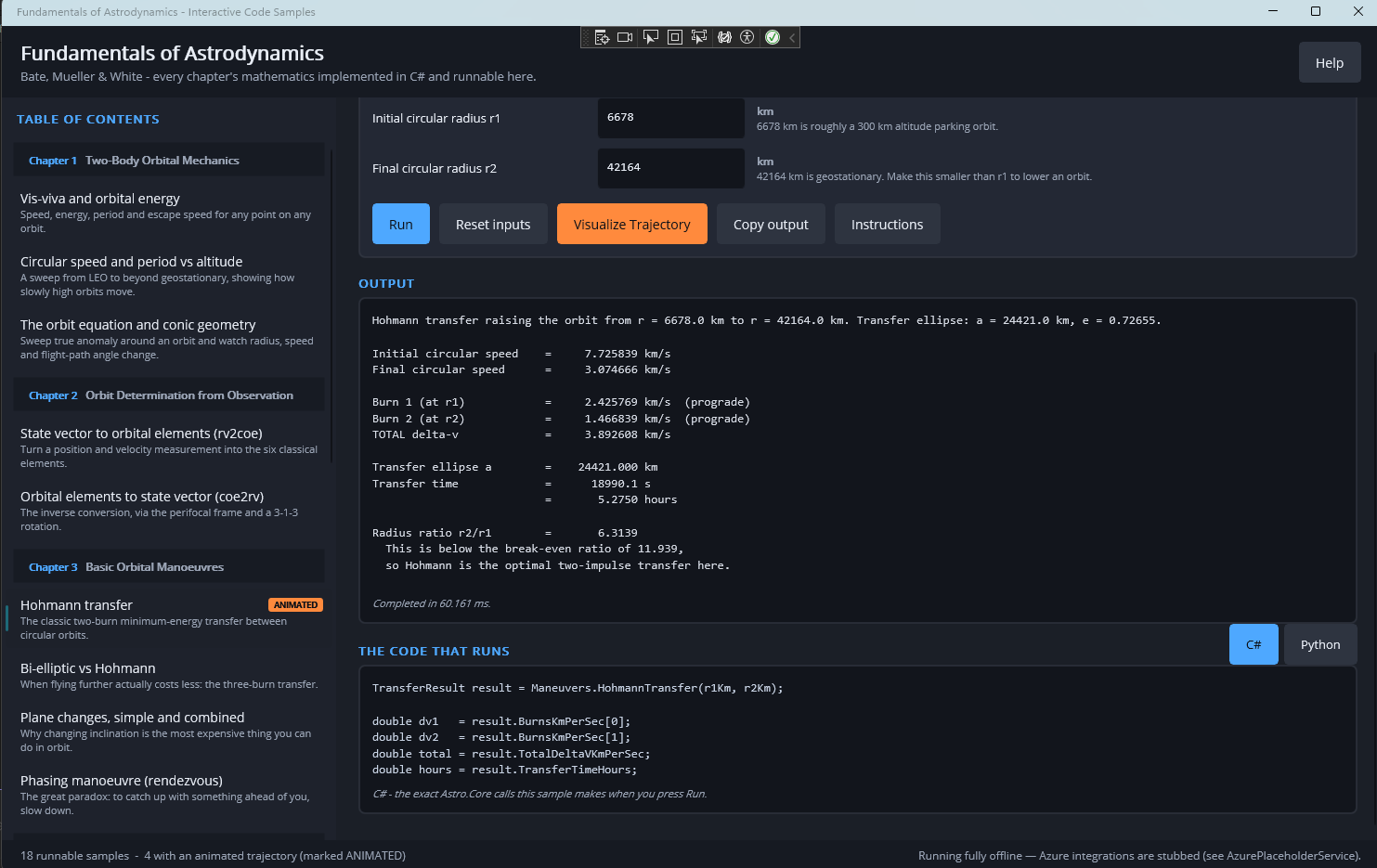
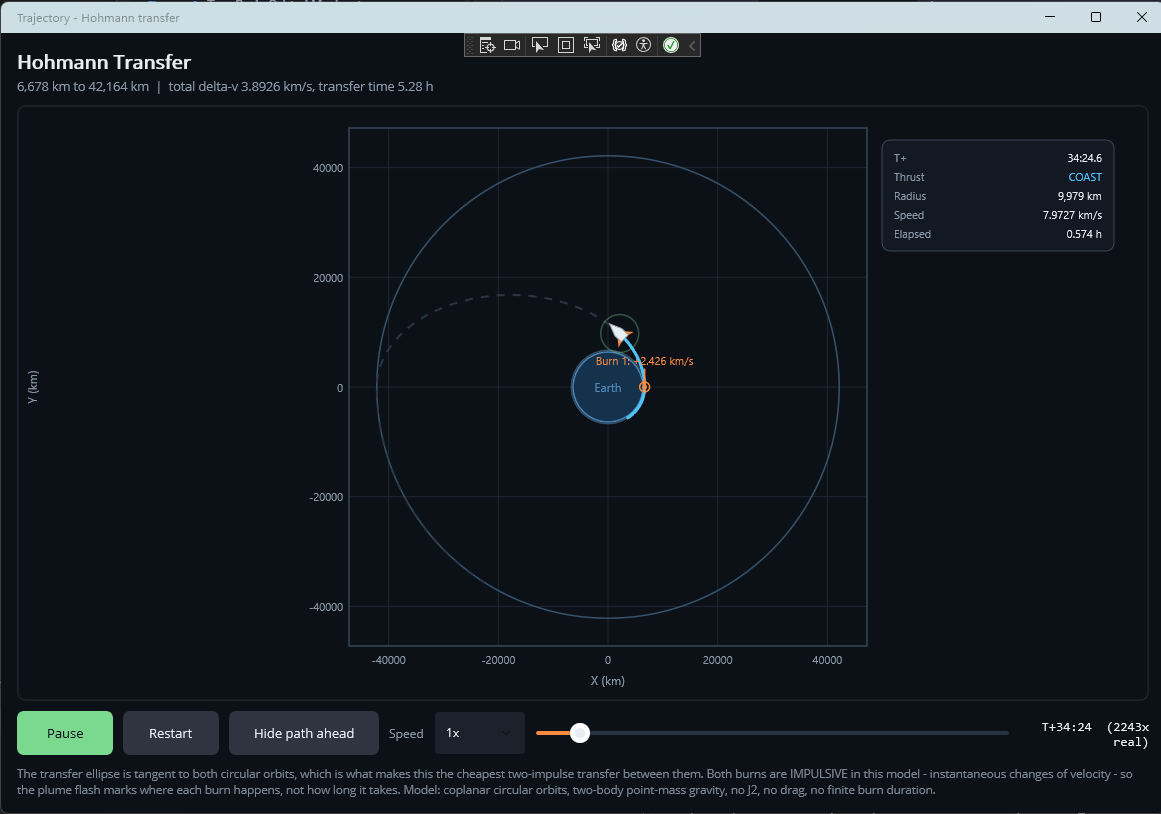
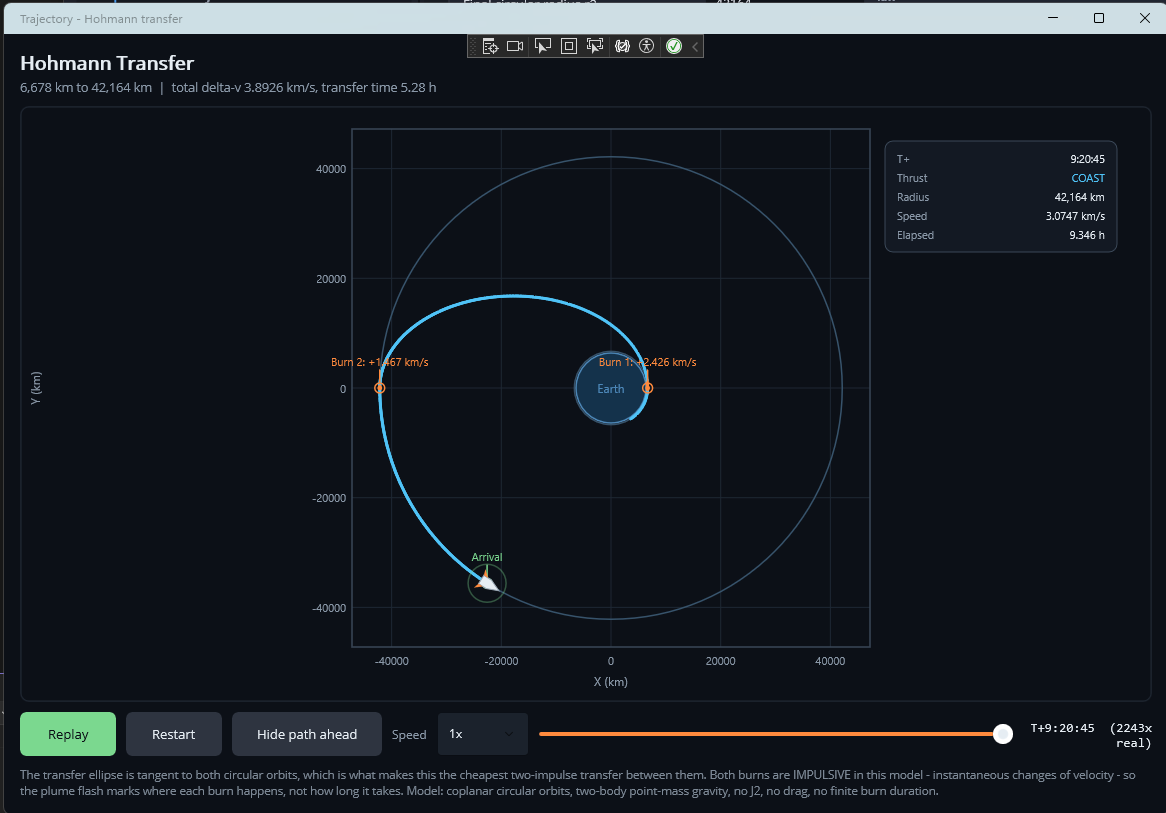
The classic USAF Academy text on orbital mechanics. It builds from the two-body problem and classical orbital elements through orbit determination, Lambert's problem, ballistic missile trajectories, lunar and interplanetary transfers, and perturbations - all derived from first principles with a strong emphasis on the underlying vector mechanics.
A program I wrote as a companion to the book, turning each chapter's derivations into working code. Enter a state vector or a set of orbital elements and it does the heavy lifting, so a student can reproduce the book's worked examples, verify homework, and change one parameter at a time to see how an orbit really responds.
- Two-body propagation and state vector to classical orbital element conversion
- Kepler's problem solved with universal variables
- Lambert / Gauss orbit determination from observation data
- Ballistic missile free-flight range and lunar / interplanetary transfer calculations
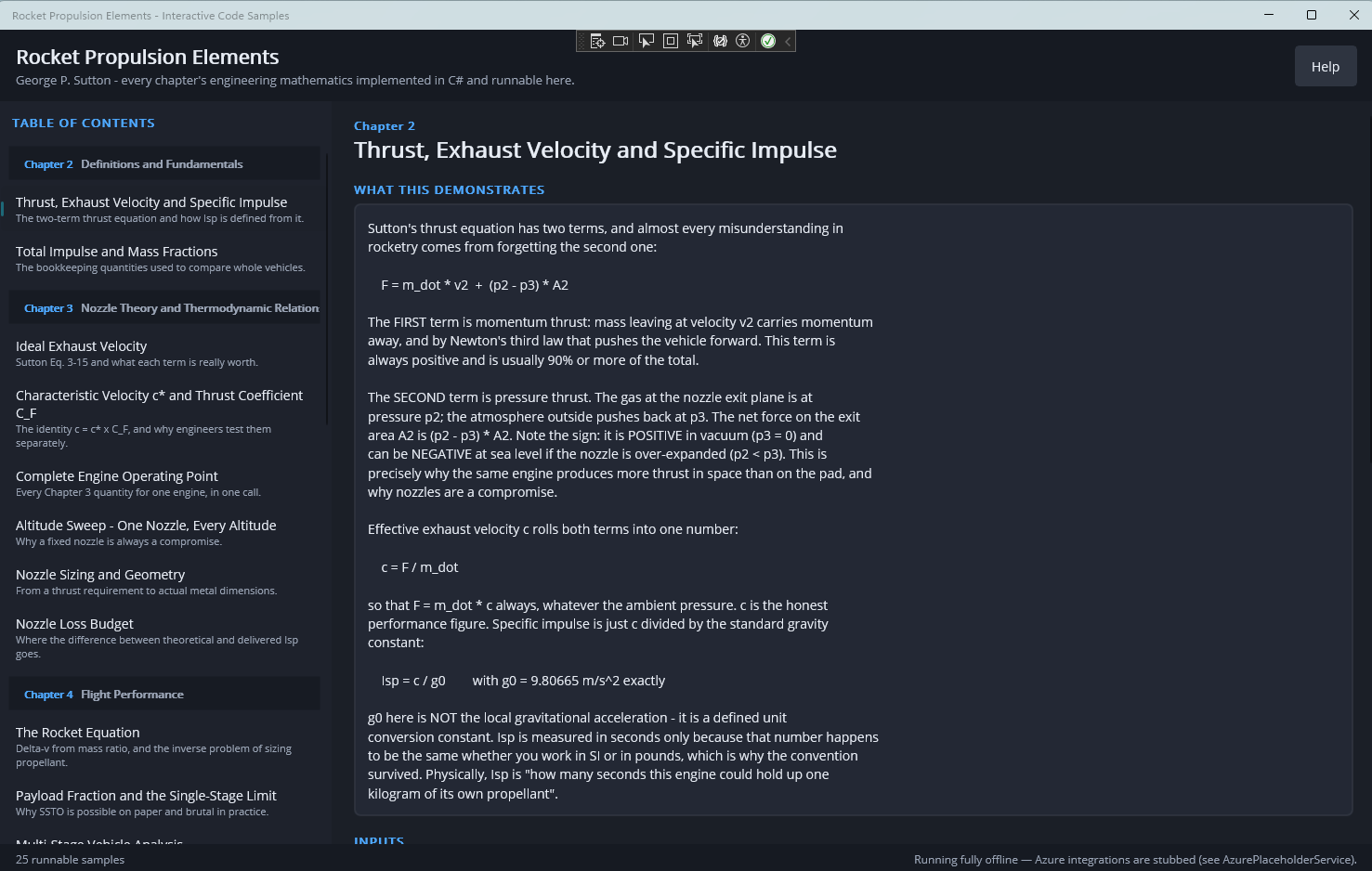
Rocket Propulsion Elements Toolkit
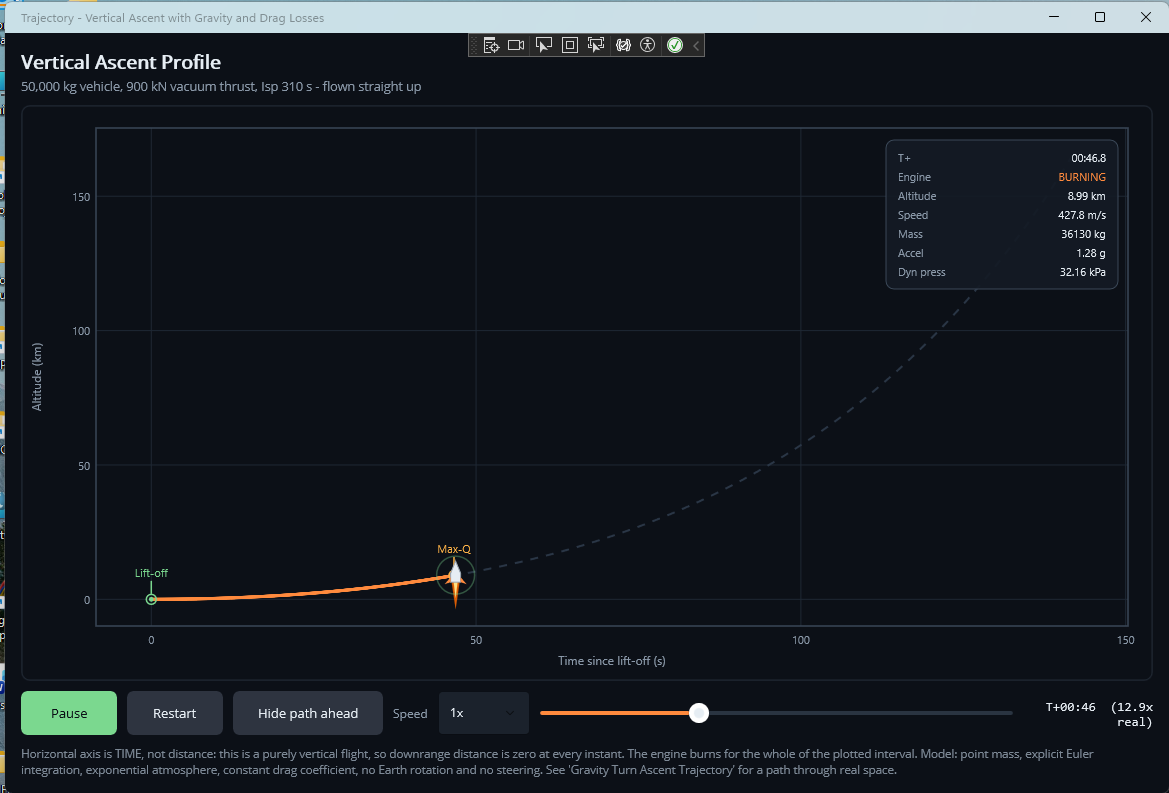
The standard reference on rocket propulsion. It covers nozzle theory and thermodynamic relations, flight performance, chemical rocket propellants for liquid and solid motors, thrust chambers, combustion, electric propulsion, and the design trade-offs that tie them all together.
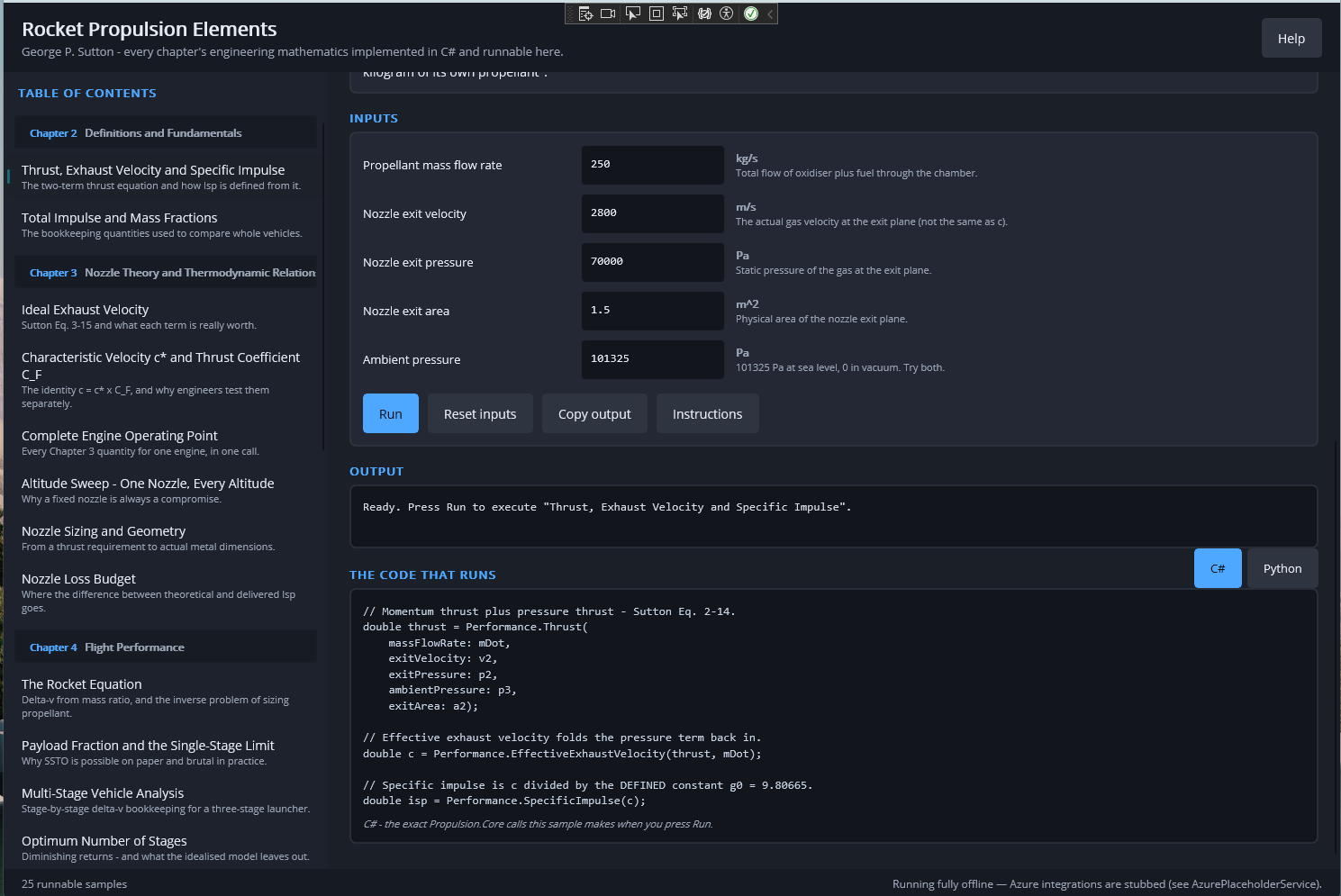
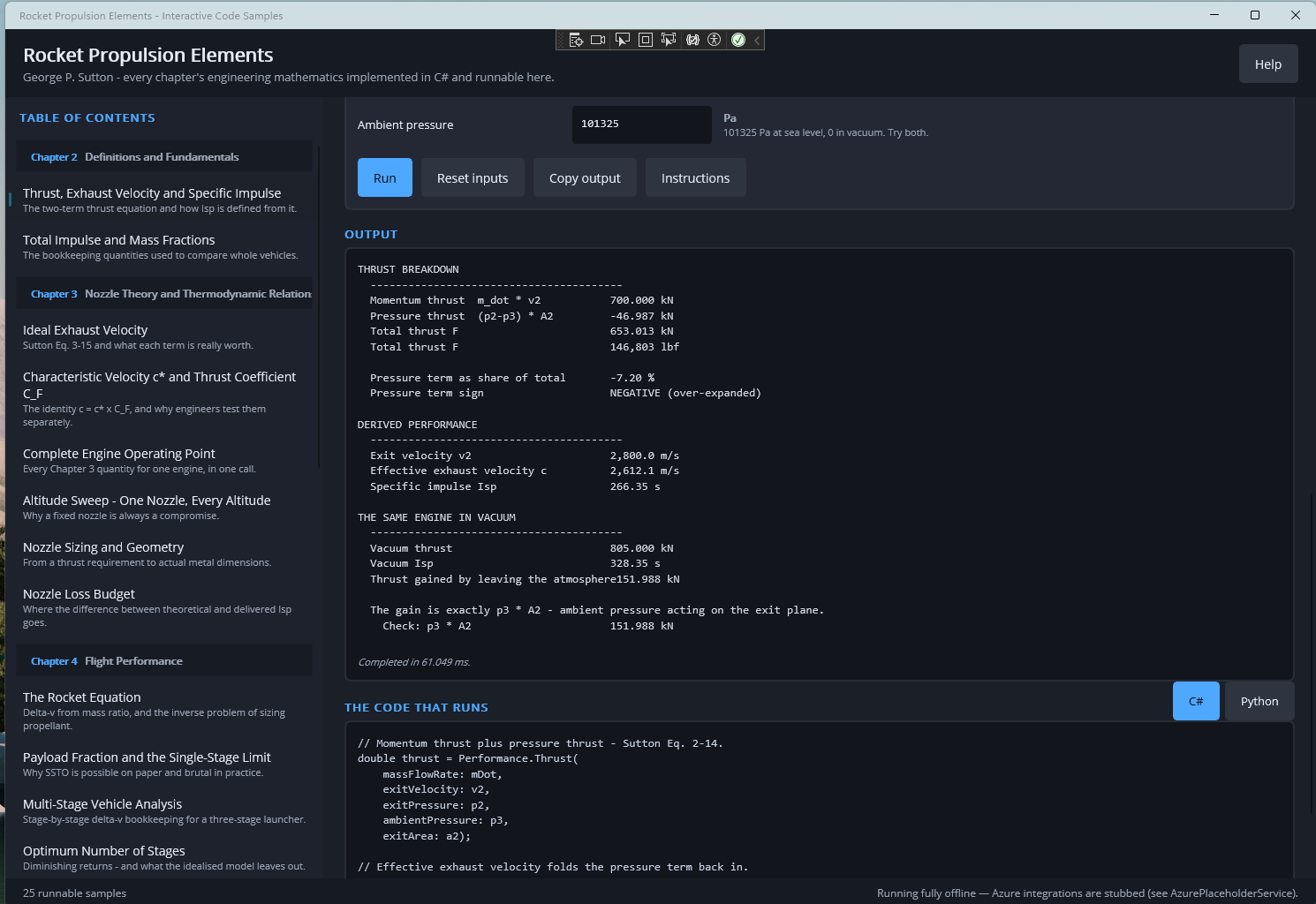
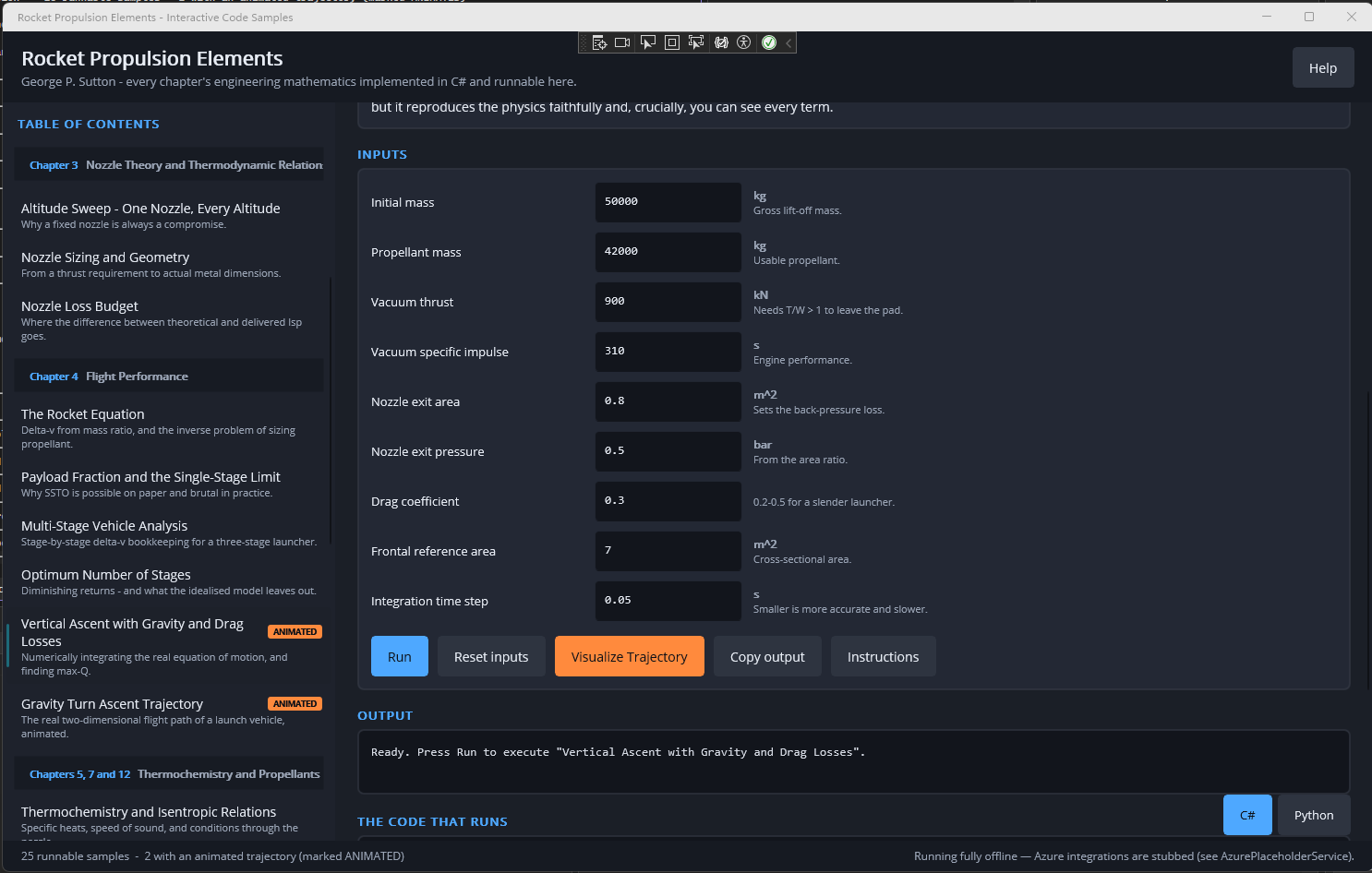
Companion software I wrote for the book that implements the performance equations and design charts. Engines and nozzles can be sized and compared interactively, which lets a student see immediately how chamber pressure, expansion ratio, or propellant choice moves specific impulse and thrust - the intuition a static textbook chart can't give you.
- Ideal nozzle performance: exhaust velocity, thrust coefficient, characteristic velocity
- Specific impulse, mass ratio, and delta-v flight performance calculations
- Nozzle area ratio and expansion / altitude performance trade studies
- Propellant combination comparisons for liquid and solid motors